
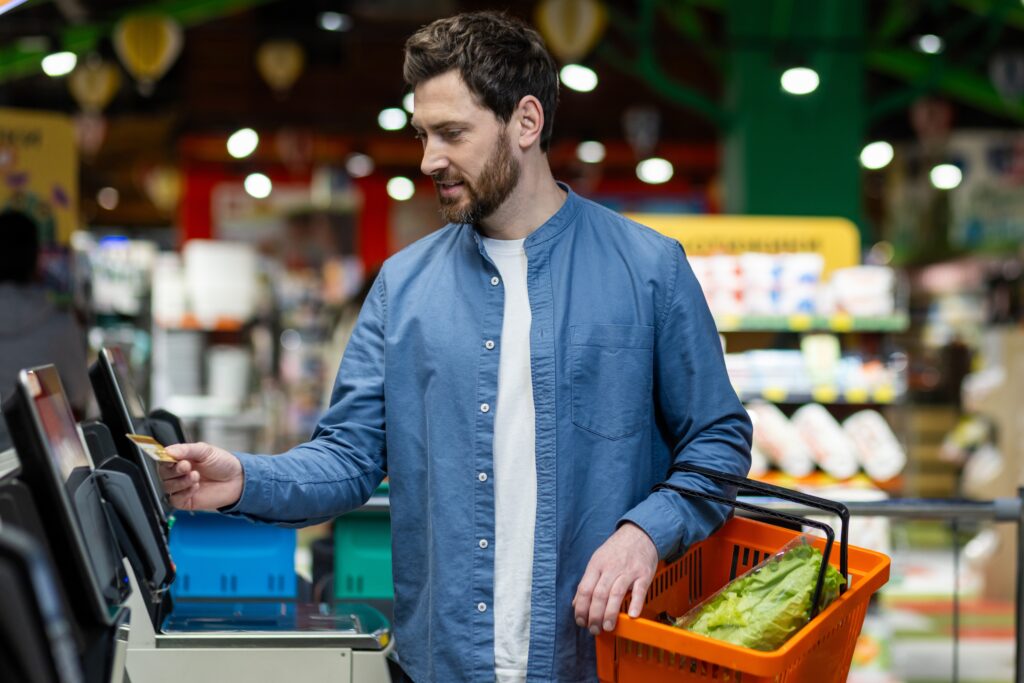
Today’s shoppers expect fast, frictionless interactions, and self-service checkout software gives them the autonomy they prefer. As stores attempt to keep pace with shifting preferences, checkout processes must deliver speed, flexibility, and convenience. Investing in an automated checkout system is no longer about following retail trends. Instead, it signals a visible commitment to respecting customers’ time and removing the bottlenecks that frustrate them most.
The right point-of-sale (POS) system for grocery stores makes customer-operated checkout feel natural. FlexRetail’s system runs both staffed lanes and self-service stations from the same hardware, allowing stores to adjust instantly to real-time traffic patterns and shopper expectations.
Read on to see how Flex Checkout transforms the checkout experience, improves customer retention, and safeguards your bottom line.
What is Self-Checkout?
Self-checkout lets customers handle scanning, bagging, and payment themselves. Instead of loading their items onto a conveyor belt for a cashier to scan, a touchscreen interface guides them through barcode scanning, produce weighing, payment processing, and receipt printing. Over the past six years, customer-led checkout has increased by 450% and now accounts for 30% of all grocery transactions.
The concept isn’t revolutionary. Self-service stores themselves faced backlash when they first appeared. Believe it or not, 19th century shoppers actually preferred handing shopping lists to clerks who assembled orders for them. That changed, and so has checkout. Each new generation of self-service technology has been met with skepticism, then gradual adoption, until it becomes the new normal.
Modern self-service POS systems come in various forms, but the smartest approach is hybrid functionality, where the same terminal works as both self-service and cashier-assisted checkout. This versatility lets you adapt to traffic patterns, customer preferences, and staffing levels without investing in separate hardware. Hybrid systems protect margins, reduce clutter, and eliminate the need for dedicated self-checkout devices.
From Full-Service to Self-Service
In the 1980s, an impatient Florida shopper grabbed the scanner from a slow clerk and started scanning his own items. David R. Humble witnessed this and asked why this wasn’t already possible.
Three years and $5 million later, the first self-checkout machines were installed at a Kroger in Atlanta in July 1986. Early systems were clunky, using lasers or scales that created more frustration than they solved. The infamous “unexpected item in bagging area” message became a punchline. Still, the idea persisted because customer behavior was already pointing in that direction. People wanted more control, not less.
Progress was slow until 2016-2017, when retailers installed 63,000 units globally in a single year. Then COVID-19 accelerated everything. POS contactless checkout shifted from preference to necessity, and shoppers who had avoided the technology suddenly had strong motivation to learn it.
As of 2025, 96% of grocery stores in the U.S. offer self-service checkout lanes. New AI-powered systems streamline operations, prevent fraud, and dramatically reduce intervention rates. With the global market expected to grow from $6.3 billion to $17.27 billion by 2032, self-scanning lanes have officially moved from novelty to standard retail infrastructure.
Why Independent Grocers Choose FlexRetail
The growing demand for self-service checkout lanes demonstrates that investing in the right system benefits both customers and store performance. These advantages can be seen across several critical areas:
- Labor Efficiency: One employee manages 6–8 self-checkout stations versus a single traditional lane, freeing staff to assist customers elsewhere in the store.
- Customer Demand: 77% of people prefer automated checkout for speed, shorter lines, or privacy, seeing it as a way to streamline errands while giving them control over how and when they complete their purchases.
- Business Continuity: Self-service lanes keep checkout even when staff call in sick or quit unexpectedly, providing operational flexibility during peak periods.
Taken together, these realities demonstrate how customer-operated checkout systems are essential for any store looking to stay competitive.
What Makes Self-Checkout Work
From clunky 1980s machines to today’s AI-driven lanes, one principle remains unchanged: usability is key. FlexRetail guides shoppers naturally through every step, making self-service checkout effortless.
Intuitive Design and Seamless Switching
Customers shouldn’t need training. Clear visual cues, minimal text, and large buttons reduce confusion. FlexRetail’s split-screen display shows item details and running totals simultaneously, preventing surprises at payment. This thoughtfully designed POS experience keeps checkout moving and customers coming back.
What sets Flex Checkout apart is its dual functionality. It switches instantly between self-service and cashier-assisted modes. During slow periods, shoppers serve themselves. When lines grow or help is needed, staff activate cashier mode immediately. One system, maximum adaptability. Plus, FlexRetail’s built-in dedicated customer support ensures you’re never left troubleshooting issues alone during peak hours.
Cost-Effective Hardware Integration
Instead of costly cash acceptors, FlexRetail relies on standard cash drawers, reducing maintenance costs and expediting employee training. Flex Checkout integrates seamlessly with barcode scanners, scales, payment terminals, receipt printers, and security systems across vendors, ensuring stores aren’t locked into a single hardware ecosystem.
The open architecture goes further than hardware, connecting with e-commerce platforms, third-party delivery systems, loyalty programs, electronic shelf labels, and payment gateways. FlexRetail’s POS technology integrates with every critical system right from the start—no custom development required.
Learn more about FlexRetail’s POS hardware options.
Real-Time Pricing and Smart Security
Nothing frustrates shoppers more than shelf prices not matching checkout totals. FlexRetail’s cloud-based architecture ensures every self-service POS station reflects current pricing in real time. This consistency eliminates the most common source of checkout disputes and delays. Behind the scenes, transaction data automatically updates stock counts, making accuracy a natural byproduct of checkout.
FlexRetail reinforces security at every step and keeps checkout moving by accepting every payment type customers bring to the counter—credit, debit, EBT, WIC, mobile wallets, AliPay, WeChatPay, Venmo, checks, store credit, gift cards, and in-store coupons. All transactions are encrypted and PCI-compliant, protecting customer data without slowing checkout.
Offer Seamless Self-Service with FlexRetail POS
Customer-operated checkout is growing 14.5% annually. Shoppers expect it. Labor shortages demand it. Whether you’re an independent grocer, specialty market, or ethnic supermarket, your store deserves a partner who understands independent grocery operations.
With 30 years of grocery-focused experience, FlexRetail POS solutions reimagines self-checkout as a flexible, customer-first system that frees your staff to focus on service instead of scanning.
Experience the future of store checkout. Request your personalized FlexRetail demo today.